Category: Uncategorized

How to Conquer the Unknown

As an incoming 1L, I think the hardest thing about law school is not knowing anything about law school. Before starting at your new law school, you can go to all the open houses, read all the prep books, and do everything to get ready for this journey. These things give you the general gist of what law school will be like, but it’s not everything. The truth is, you will never really know what you are getting into before you go because everyone’s experience is different. I know that probably doesn’t come across as very soothing, but it’s not as bad as you think. We all eventually figure it out!

When you get to law school, you are going to be put in a room with a bunch of people who are all accomplished somehow, and who all have the same goal: to get through law school. Despite the end goal being the same, the path to getting to this goal is rarely the same. I urge you to keep this in mind before you start comparing yourself to others. The first semester there’s a million thing that goes through your mind:

“How many clubs should I join?”

“What GPA is considered good?”

“When do I need to get an externship?”

“What classes should I take next semester?”

Hopefully by the time you are getting to law school, you know a little bit about yourself. What works for you… what doesn’t work for you… Trust yourself! Just because someone else is doing something does not mean you have to be doing it. Remember your first priority is just passing your classes. Everyone struggles with knowing if they are doing the “right thing”. So we tend to look to our peers. I remember always being stressed over hearing how late people were working in the library the night before. Meanwhile, I finished up around 8 p.m. and went to bed at a reasonable time. I would get a pit in my stomach thinking I’m not doing enough and would fail. But I would fail to account for the fact I just start studying others where as they would not start studying until much later in the day. But that’s just what worked for me, and that’s what worked for them. When grades came around, I did fine because I didn’t switch up what I knew what wouldn’t fail me. It’s easy to think that you don’t belong because your routine is not exactly the same as your friends, but that is the farthest thing from the truth!

This doesn’t mean you can’t take advice from people and maybe learn useful tools to succeed from others. It just means that it does not matter if someone is in three clubs and you are in none. As your law school career goes on, you will figure out what you can handle, join clubs, get internships, and figure out what classes you want to take. You will learn what works for you, how to study, how to brief, and how to be a successful law student on your own. Most importantly, you will be okay, just trust yourself!

Study Abroad and Expand Your Legal Education

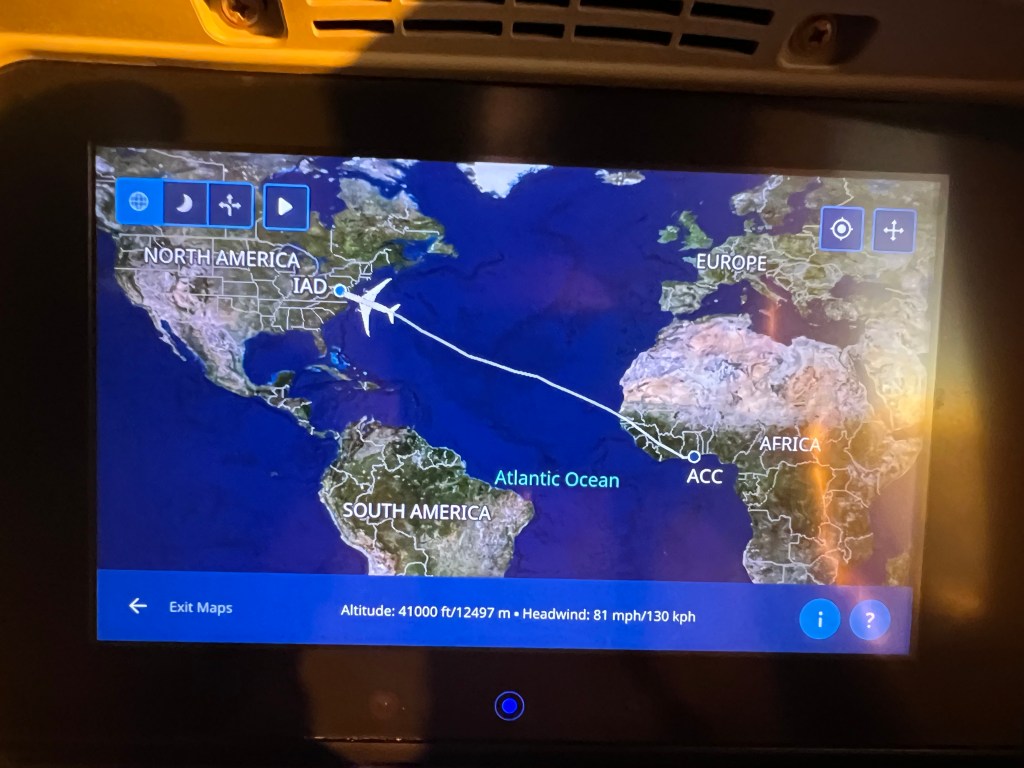
            While I was earning my undergraduate degree, I studied abroad during winter intersession in Greece, and it proved to be the most memorable part of my college experience.  I learned during my 1L year that Widener Commonwealth allowed students to study abroad with other law schools and I knew that I wanted to take advantage of the opportunity.  As I finished my 3L year with only one semester to go, time was running out on my chance to study abroad.  I learned of a program offered by Fordham University that was taking place over the summer which offered a course on International Human Rights in Ghana and realized this was the perfect opportunity to not only study abroad but to travel to Africa, a continent I had never visited.  Luckily, a classmate of mine, Keri Nace, was also attending the program and we partnered as travel companions, roommates, and looked after each other. 

            The course was taught by Professor Galizzi, who is originally from Italy, and was attended by students from all over the United States.  It was exciting to meet students from other schools and share stories about our law school experiences.  The course itself was also very interesting.  International law is not an area that is widely taught, and we learned a lot about the different treaties that shape international relations and the effects those treaties have on the lives of everyday people.  We also met with local government officials and nonprofit leaders who gave firsthand accounts of the importance international human rights laws have on the people living not only in Ghana, but the entire African continent. 

The people in Ghana were so friendly and welcoming.  We stayed in Accra, which is the capital of Ghana and although it is very different from the life we know in the United States, it was mostly modernized, although the internet connection could be unreliable.  I was nervous to travel so far from home, but Ghanaians have a reputation for their warm hospitality, and everyone we met was accommodating and gracious.  Although there are many languages spoken in Ghana, the official language is English and it was helpful that there was not a language barrier when communicating with locals.  This was especially beneficial when traveling around the city of Accra because despite their kind demeanors, Ghanaians are ruthlessly aggressive when driving and the roads are very crowded.  There are also vendors walking between cars selling all different types of goods from homemade treats to windshield wipers from baskets perched atop their heads.  Their lifestyle is very different from ours, and although it made me grateful for the opportunities afforded me as an American, I admired the deep community connection Ghanaians value.    

Aside from exploring Accra, we also took a field trip to Cape Coast where we stayed at a resort for one evening and toured the Elmina Castle which was used as part of the slave trade.  We also visited the Assin Manso Slave River Site where slaves took their last baths before being forced from their homeland.  It was a very somber experience and really enforced the importance international human rights laws have in preventing future atrocities in human exploitation.  It was also a chance to reflect on how lucky we are to experience the independence to do things like go to law school, study abroad, and enjoy all of the freedoms that we so often take for granted.  The field trip ended on a high note as we were able to visit the Kakum Canopy Walk where we made our way across suspended rope bridges 130 feet off the ground.  Although we were told there were elephants living in the jungle, we did not see any during our visit, but it was still an enjoyable part of the trip.

I would highly recommend studying abroad during law school, especially if you can convince a classmate to join you for the adventure.  It provides you with a chance to learn about law from a different perspective and to meet students and people from other parts of the world.  Not only will you learn about other cultures and ways of life, but you may also learn something about yourself in the process. 

The To-Do List

One of the biggest learning curves that I had to learn is how to lean into the never-ending to-do list. Even before classes began I a piece of paper with a list of tasks to do paired with their coordinating due dates. I am personally one who loves these lists. I would create them in my everyday life, prior to law school. These lists would be compiled of everything that I had to complete, big and small for the day. Miniscule objective like brushing my teeth, picking out my outfit for the next day, packing my gym bag, and making dinner would find its way onto my lists in order for me to gain satisfaction when I crossed it off. However, once I got to law school, I quickly realized that I was going to need a whole new notebook just to write down everything that I had to do. This quickly got overwhelming because I could generally plan out every second of the next 14 weeks of my life with hundreds of pages of reading, formative assessments, and writing assignments. Then I realistically could understand that more little tasks would pop up throughout the week as they inevitably do throughout the semester. I could feel myself being put into a box much like those next to each task. I could see myself going insane, but at least everyone around me was going insane as well. I continuously tried to get everything on the to-do list done, but each passing second seemed to cumulate three more things that had to be done. There was no winning, there was no end. I had no other option than to realize that it never will. There will always be an email to send, an assignment to read, extra studies to complete, opportunities to pursue, and outlines to make. That is okay. There are only so many hours in the day, and only so much work that one can sustainably do. This sustainability level is different for everybody. Some people need less sleep, food, breaks, alone time, or study time than others. It is no use to compare yourself to those who can do the less. They will always exist, and you will run yourself ragged trying to match them. It always ends up with you sick, tired, hungry, behind, and mentally exhausted.

Once I came to peace with this bit of information I began to think. I realized that this today list will always be there. This made me shift my perspective to start valuing my time in terms of productivity. The way I measure such productivity is in terms of my own sustainability and success. You may be asking yourself by what I mean by all this. Basically, I stopped worrying about how many things were on my to-do list and started worrying about me. There are certain things that over the past twenty-odd years of my life that were concrete. I have to have two solid meals a day, and maybe I’ll throw a snack in there if that’s not enough, I need 9 hours of sleep, I need to watch at least two movies a week, if I don’t have hot water in my shower I will be crabby, I probably won’t do anything of exceptional work after 7:00 pm, and McDonald’s fountain cokes makes any day better. Without these absolutes I am not a joy to be around, and I am straight up not having a good time. So, I started to live my life by these absolutes. These were the top things on my to-do list every day, the things that were non-negotiable. I then would incorporate the top five or six things that had to be done for the next class. I began to live a more present life. I wasn’t worried about three-months from now. I was concerned with having everything I needed for the day done and setting myself up for success the next day. If someone asked me to hangout after class, or go to their home town for the weekend, I would make sure I would get enough work done to be able to go and be present. However, I would weigh my productivity each time. I would compare how much work I would get done during a certain amount of time and the quality of that work with the reset value I would get from hanging out with my friends, going home, or watching a movie.

 Now this won’t always be rainbows and butterflies. There will be times where I would have to stay up a little later, wake up a little earlier, cancel on plans to do work, or be unable to do the work that I had plans of completing. However, I will only be young once, have the opportunity and availability to do certain things now, and hanging out with my friends will be less frequent. So, I should enjoy it as much as I can. Now don’t get me wrong, I don’t think it should be all play and no work. We are in law school for a reason, and that is to learn and there is work required for that. But there has to be a balance. My peers now will turn into my colleagues in a rather short amount of time. The relationships we forge will expand into out livelihood. I want to invest in that now. I want to invest in those people and myself. I will gladly find room on my to-do list to do that because although grades are important, I think the people you surround yourself with will lift you up just as much as you do them. This can be muddled with the chaos and stress of your school year, but it all gets done, even if your to-do list doesn’t

Tips to Make the Most of your Internship

By Erika Firestone (3L)

Whether you work for a law firm, a government agency, or a district attorney, internships are an excellent opportunity to gain practical knowledge and experience that places law school within the context of reality. I’m entering my third year of school and thus far I’ve had the opportunity to intern at the State Ethics Commission, with a Federal Judge, and for a large regional law firm. Here are a few of the tips I’ve gathered along the way.

Buddy up with an associate or newer attorney.

As a law firm summer associate, I’ve saved my own skin a few times by reaching out with “dumb” questions I have to associate attorneys. They were in the role of intern not so long ago and can remember how daunting it can be to start a job and not know tiny things that can make a big difference, like whether an assigning attorney prefers WestLaw or Lexis. They can help you navigate institutional practices, relations with partners, and more.

Get to know the support staff.

Paralegals and legal assistants are the backbone of the legal practice and your greatest resource at any new workplace. They can show you where the copier and the lunchroom are, how to locate certain documents, where to find letter templates, etc. It’s likely that your supervisor will also be paying close attention to how you treat support staff, although kindness is always the best approach regardless.

Ask a TON of questions.

You are at an internship to learn more than you are to provide the organization with valuable work, and they know that. Do not spend too much time struggling over something you don’t understand. I am someone who loves to knock on open doors and ask questions as often as I can. Not only has this helped me learn so much more than I could have on my own, but it helps to develop stronger relationships with the attorneys in your work place.

Let them know what you’re interested in.

If you go into a law firm knowing that you loved your family law course, ask if you can take extra assignments from the family law attorneys. If you really have an interest in litigation, ask if you can observe court as often as possible. You have more control over your experience than you think and your supervisors will be glad to watch you develop specific interests given the vastness that is the law.

Own up to your mistakes and learn from them.

My single greatest piece of advice is to never make excuses for making mistakes at work. They happen all of the time, and chances are your supervisors have made some pretty big ones througout their careers. Own up to it and ask how you can do better in the future. You likely won’t make the same mistake twice.

Find the Time for YOU

When I entered law school. I had the same questions that plague most 1L evening division students: How on earth am I going to do this? I have a full-time job, 2 kids, and an hour commute to Widener Law. Is this even realistically possible for me? Now entering my second year in the evening division, I can confidently say the answer is yes. I believe one key to success is finding the time for YOU.

Law school is challenging. The reading is sometimes voluminous, intense, and difficult. Since most of my reading and studying happens on the weekend, I’ve had to implement some strategies to maximize the effectiveness of the time I have. One of the first things I chose to do was make Friday a “no school day.” My daughter and I made Friday night our “date night” and we often go out to eat or watch a movie and chat about the events of the week (she’s 12 so there’s no shortage of conversation!) If she would happen to fall asleep early on Friday, I’d crack open the books, otherwise, reading and studying starts on Saturday morning. I learned early on that some of these readings are dense and you need to give yourself time to digest and understand the material. I would read a case or two, and then get up and switch laundry over, or make something to eat, or take 10 minutes to just decompress. Then, I’d start the next case. Take the time in between cases to do your normal chores don’t allow these tasks to distract you from your studies.

Lastly, there were times that I really, REALLY wanted to do something and it was scheduled for the weekend. For example, concerts, Phillies games, and Ravens games sometimes fall on a Saturday or Sunday. You have to prioritize what is most important to you and, in my case, I did choose to go to some of these events (not all of course) even though it took away from study time on the weekends. It may have meant a later night studying (my usual time was about 10am-10pm with multiple breaks in between), sacrificing the date night, or it may have meant taking a day off of work to catch up. Law school life is a balancing act but, if you learn how to balance effectively, it can be the most rewarding experience of your life! Make the time to do little things that you enjoy, whether it be a hike, a concert, or a drive to get ice cream. The key to it all is moderation.

Finding your Niche

When I first decided to go to law school, there were a few areas of law that interested me, but of course, people would always ask “What type of law do you want to go into?”. And the more I got asked that question, the more I thought about it and how there are so many different types of law to go into. Eventually, I realized it would be impossible to be an expert in multiple types of law and I would have to narrow down what I want to do. Most students have this conflict with finding what type of law they want to practice, and this post will be about sharing my experience and how I found what I want to do with my law degree. 

When I first came to Widener, I thought that I would be super interested in contracts, property law, and family law. However, when I took contracts and property law my first semester, I realized that I didn’t want anything to do with either of those areas. I felt lost and had a hard time trying to figure out what to do after my initial plans were foiled. During my second semester, I took criminal law, and that is where I had a new passion emerge. I finally found a class where I felt completely engaged and felt like I knew what was going on. After taking that class, I thought I should give the criminal law area a more thorough examination and open up my possibilities for post-graduation employment. 

That semester, at the last second I decided to apply for an externship with the Bucks County District Attorney’s office. I was nervous and felt under-qualified but I was so intrigued after that criminal law class I felt confident enough to give it a try. That summer at the district attorney’s office turned out to be one of my best summer jobs ever. I remember even after week two I was already telling people how I definitely found what I want to do and that I could confidently say I knew what I would do with my law degree. Getting to work on researching case law for real-life cases and getting to watch full jury trials was an amazing experience and confirmed in me that no matter what, I wanted to become a litigator in criminal law. 

Over my 2L year, I took more criminal law-focused classes and some torts classes that would get me some litigation background. I loved those classes and they helped me continue to ignite my passion. Picking classes focused on what you want to practice is so important. It helps you learn about what you want to do and if you pick things related to your area, you can get some experience in other areas with skills that transfer over. However, I still recognized the importance of branching out and still took classes for things that I thought could be areas I would be good at like Family Law and Environmental Law. Every class you take in law school, even if it is unrelated to what you want to do, will still teach you valuable skills that transpose to what you enjoy so there was no value lost there. 

During my 2L summer, I came back to the Bucks County District Attorney’s Office and found myself feeling the same feeling I felt that first summer. Working in the criminal justice system is thrilling work that you can feel good about. You can see yourself making a difference and you can directly use your skills as a lawyer litigating in court. During my 2L summer, I got my certified legal intern papers so I could argue in court under the supervision of one of the DAs and I have been doing preliminary hearings against real defense attorneys. It’s a low bar to meet for the threshold to get a case held but it is a thrilling experience and I couldn’t be any happier. 

The point I tried to make in this blog by sharing my experience is that you may not know what you want to do with your law degree, but as long as you are comfortable branching out and trying new things, you will eventually hit that niche subject that sticks with you. Mine was criminal law and I know for a fact, there is nothing else I would rather do. Getting internships in the areas that interest you is vital. For me, it confirmed what I want to do, and for others, it confirms that they do not want anything to do with certain areas. Law school is intimidating and finding out what you want to do is difficult. This strategy worked for me and I’m sure it could benefit anyone considering law school. Good luck and I hope you enjoyed my story! 

How to Navigate the Change in Your Relationships while in Law School

While the title of this post seems rather pessimistic, it is really positive overall. But, let me be the first to say that your relationships WILL change while you are in law school. Relationships with your parents, grandparents, significant other, friends, and spouses will all change.

The best piece of advice I was given on this topic was actually from a professor at Widener. On the first day of orientation, he offered us a packet as we exited the classroom. On my walk to my car, I looked down at the packet I was just given. The packet was actually a snippet from a book. This chapter was titled, “A Chapter for the Family & Friends of Law Students”. Naturally my interest was piqued, and I began to flip through the pages. My eyes were stuck on the line that read, “Challenges to Your Relationship and What You Can Do to Make Things Better.” After reading this section, I decided to pass this chapter to my parents and my boyfriend. They all read it and my Mom still mentions it to me on occasion.

As a third-year law student, I can confidently say that all of the things mentioned in this chapter are in fact true and that I am very glad that I was at least cognizant of them. I am happy to be able to bestow this summary onto you, reader.

1. One major problem between law students and the people they have relationships with is the lack of understanding that can often lead to frustration on both sides. From the law student’s perspective, you are now put under more stress than you have likely ever experienced. You are worried about cold calls, finishing your readings, and attempting to squeeze in a few moments just to do nothing. This lack of understanding is especially true during finals season; you are studying for most of the time you are awake, which clearly does not leave the most room for conversation or visits to people. The person who is not in law school may feel that the law student is favoring school over them, or honestly, because of the lack of being in the law student’s shoes the person may expect out of the law student what the law student was able to give them before. Unfortunately, this cannot be the case. So, let me say this. Law student: while you are incredibly busy and may not get to do exactly what you want at the drop of a hat, there is still time for life outside of law school! Now it just may require planning weeks in advance and getting ahead on your assignments, but it can be done if you want to go visit someone. On a daily basis, set aside time to talk on the phone with the individuals you choose to. Non-law student: first and foremost, give your law student some grace. They are under immense stress, and they still care about you even if they are not able to visit as often. Be open to making plans far in advance, or getting text messages when you are used to phone calls.

2. Another contribution to problems between law students and the people they have relationships with is the lack of energy and time the law student will have. Unfortunately, law students have very little time, and even less energy to do things on a daily basis. As a support person in their life, offering to do small tasks to assist them in their day to day life will go miles for them. One of the best things that my mom does for me is help me make a grocery list each week on the phone. Although it sounds like such a simple task, it takes a little bit off of my plate. Another tip I have for law student supporters is the fact that even though you may feel that the student has studied enough because they have been studying for weeks, being in that position no amount of studying ever feels like too much. And to the law student: it is okay to say no to doing things to give yourself a break. As I mentioned previously, the big things that you will encounter to celebrate your family, friends, or significant other will be planned in advance that will give you time to plan ahead.

3. Stress, stress, and more stress. Stress also (shocker) is a contributing factor to problems between law students and those they are in relationships with. Everyone handles stress differently. Some shut down, some lash out, or do a variety of other things. Whether we like it or not, this does bleed into our relationships outside of law school. Competitive nature, fast-approaching deadlines, and performance anxiety for 14 weeks in a row is a lot. This may lead to the student not remembering why they even went to law school. As a support person, although the law student may be short with you or lose their temper on you, try not to hold this against them as a grudge. This is in no way me condoning this occurring constantly, but it may happen on occasion.

4. This point is going to be for significant others and spouses. Being in a romantic relationship with a law student is an extra task, so I applaud you. Something you likely prided yourself on in your relationship pre-law school was the partnership aspect, the 50/50. As you can probably gather through the theme of this post, this may not always be the case. You may be the one to initiate the phone call or date night, taking out the trash for the umpteenth time, or taking your child to school more often than not. You just need to remind yourself the goal of this; for your law student to graduate law school and become an attorney. Another thing that is different is the way to express your love for the law student. Something that my boyfriend has done for me is send me flowers during finals season. There is honestly no better feeling than coming home from a day of studying at the library to flowers with an encouraging note. While it may seem small, it means the world to the student in that moment.

Overall, while your relationships will change due to the law student’s undertaking of school, the relationship still will remain. It just takes a little bit extra effort. Relationships themselves are often complicated, and law school makes that harder. But, law school can make your relationships so much better as well. The law student in your life is pursuing a dream and a passion. This experience is only three or four years, but the relationships will last way beyond. Loved ones who support their law student receive an appreciation beyond words, and the relationship between you and your law student will be benefitted in the long run.


Support During Your First Year

1L year can be stressful! During your first year of law school, you are trying to figure out what is expected of you from your professors, trying to find a way to get ahead of the workload, finding a way to catch up if you do fall behind, and trying to figure out what type of law you want to practice if you aren’t sure (this is completely okay as a 1L!). However, there are SO many resources for students on campus!

In almost all 1L classes, there is a 2L or 3L student who performed well in the class who will be available to help you along the way. These students are called Academic Success Fellows (ASFs) and hold weekly office hours throughout the semester for any questions you may have. ASFs may also attend your classes and help the professor if necessary. In addition to the student ASFs, professors regularly hold office hours and are extremely approachable (there are no dumb questions!). If the professor’s office hours conflict with your schedule, they will find a different time to meet in person or over Zoom if needed.

Beyond academics, all members of the Widener community are willing to help at any given moment. The Student Bar Association has a peer mentorship program which pairs a 2L or 3L student with a 1L to provide them with advice based on their own experience at the school regardless of the topic. Personally, I am a mentor and have provided advice on professors, final exams, finding internships or externships, and how to manage your time during law school. In terms of internships and externships, you will hear from the Career Development Office (CDO) throughout your first year to provide assistance with internship materials and different opportunities you will have available to you beginning the summer after your 1L year.

Outside of Widener, Lawyers Concerned for Lawyers and additional resources from the school are available for students who need them without any questions asked. With all of these resources available to you, do not let yourself get overwhelmed. Reach out before things pile up. There is nothing worse than waiting until Thanksgiving to reach out for help and finding out it is too late. We are all here for you and want you to succeed!

How to Have Free Time in Law School

There are two approaches that individuals can take when it comes to time management throughout law school – either never taking a day off or to take a day every once in a while. 

For me, I am mix of the two. My 1L year, I never took time for myself and while academically I did well, I learned that having free time was important to me as I often felt exhausted/burnt out when it mattered most. Going into my second year of law school, I made sure to make time for myself a priority and by doing so, I noticed significant improvements in not only my studies but also my mood, my mental health, and my well-being.  

Here are some tips that I found to be helpful in order to ensure I did not fall behind in classes while simultaneously being able to make free time in my schedule.

  • Plan Out Your Free Time
    • I am a HUGE planner, and having a planner – either a physical book or an electronic planner – ensures that you are able to have a space to plan out your day/ week/ month. In your planner, you are able to block out the times when you have class, when you have to study and do homework, or participate in extracurriculars. Once these times are blocked out, the rest is free time. I find that having a game plan written down at the start of the week is super helpful because I have a firm goal of getting my work done as motivation. I would recommend planning in time to do something that you truly look forward to, such as hanging out with friends, therefore, when you are tempted to take too long of a homework break, you will think about the plans you made and how you don’t want to miss out on them! 
  • Stop Multitasking
    • During the start of 1L, I know students who would try to multitask and watch TV and read or put it off until the last minute and have to speed read in order to ensure that it was completed before class.  For me, I need no distractions while I am doing homework, however, this can make the time feel like it is barely passing. One tip I use for both homework and studying is an interval timer – this way I study for twenty or thirty minutes at a time and take a five minute break. This ensures that I do not zone out while doing work and I am utilizing my time in the most productive way I can. 
    • Another thing I implemented during my 2L year is staying at school during the day and working on homework. This allowed me to get a majority of the tasks I needed to complete done during the day and that way when I left school, I was able to relax. 
  • Prioritize Your Time
    • Going hand in hand with no longer multitasking, it is important to find the biggest time wasters in your day and reduce or eliminate them as much as possible. By doing this, you will be much more productive when you have to be, which will allow you to get to your free time faster. 
    • When thinking about the biggest time wasters in your day, start thinking about how you spend your days. For me, I love to run so it is easy for me to make that a priority. Obviously, you cannot blow off your readings, but it is important to find something that you love to do in order to give you something to look forward to. Give yourself something more exciting than just laying around and doing nothing when you’re exhausted; spend the time doing something that truly brings you joy.
  • Have a “Me” Day
    • I wish I could say that during law school, you are able to enjoy your entire weekend and you won’t have to think about school at all; however, that is not the case. If you prioritize your time, you should be able to have one day off per weekend to allow yourself to truly relax. Reply to those texts your ignored, meet up with friends and family, catch up on cleaning your apartment, or just sit on your couch and catch up on your favorite shows. 
    • By cutting down on time-wasters and remaining focused throughout the week, you will have time to take a day for yourself and you earned a day to yourself! I know it’s tempting to always feel like you’re not doing enough to make yourself worthy of being ahead of the curve, but if you are truly being productive during the week you will be fine taking one day on the weekend for yourself. 

What To Expect Your 1L Year at Widener

Entering your first year of law school can be extremely intimidating because it is completely different than any learning environment you were in before. During your 1L orientation you should expect to get a small taste of what it is like to function in a law school classroom. You will have professors teach a mock class during the week of orientation in which students will be able to understand how to read cases and find the applicable rule of law from those cases. Students will also be able to understand how the Socratic method works and can prepare for the types of questions they may be asked in their regular classes once the semester starts.

After orientation, classes will begin and the regular division students are typically split into two separate groups. Each group will travel to all classes together and will learn from the same professors. The evening division is typically a smaller group of students so there is no splitting into separate sections. During the Fall semester 1L students will take Contracts, Torts, Property, Legal Methods, and Civil Procedure. Most, but not all, of these courses will then continue into the Spring semester and the courses become Contracts II, Civil Procedure II, etc. For regular division students, classes will typically begin around 9:00am or 9:30am. There is usually a break in the 1L schedule which allows time for homework and lunch and classes resume in the afternoon at 2:00pm. For evening division students, classes could start as early as 6:00pm and end as late as 10:00pm. Most 1L classes last either an hour and 25 minutes, or 55 minutes depending on the number of credits a student will earn for the course.

The amount of homework a student can expect during their first year will change over time. At the start of the Fall semester, professors tend to assign less work as they are aware students are just starting to adjust to the rigor of law school and do not yet fully comprehend cases the first time they read them. As the Fall semester progresses 1L students can expect more pages of homework for each of their classes, but this increase usually goes unnoticed because students learn how to read and understand cases faster. The Spring semester of 1L will pick up in pace significantly because now 1L students have successfully completed one semester of law school and know how to manage their time to get all of their work done before class.

1L year can be overwhelming at times so it is important for students to take advantage of the many different support systems that Widener offers. For example, each 1L class will have what Widener refers to as an “Academic Success Fellow,” this is a 2L or 3L student who excelled and received a top grade in that class in a prior year. This student will hold weekly office hours and is there to answer any questions that 1L students may have about the material. The professors of all 1L courses also hold office hours and are always willing to answer any questions students may have. Widener also has a peer mentorship program that is run by the Student Bar Association which pairs a 2L or 3L student with any 1L who wants to have a mentor and that mentor is there to coach the 1L on anything from exam taking strategies to how to find a suitable internship or externship.

A student’s 1L year can feel stressful at times, but it is also a very rewarding experience, and it is one that will shape a student into the attorney that they will shortly become.